

Manager-Worker Pattern
Efficient Task Distribution in Complex AI Ecosystems
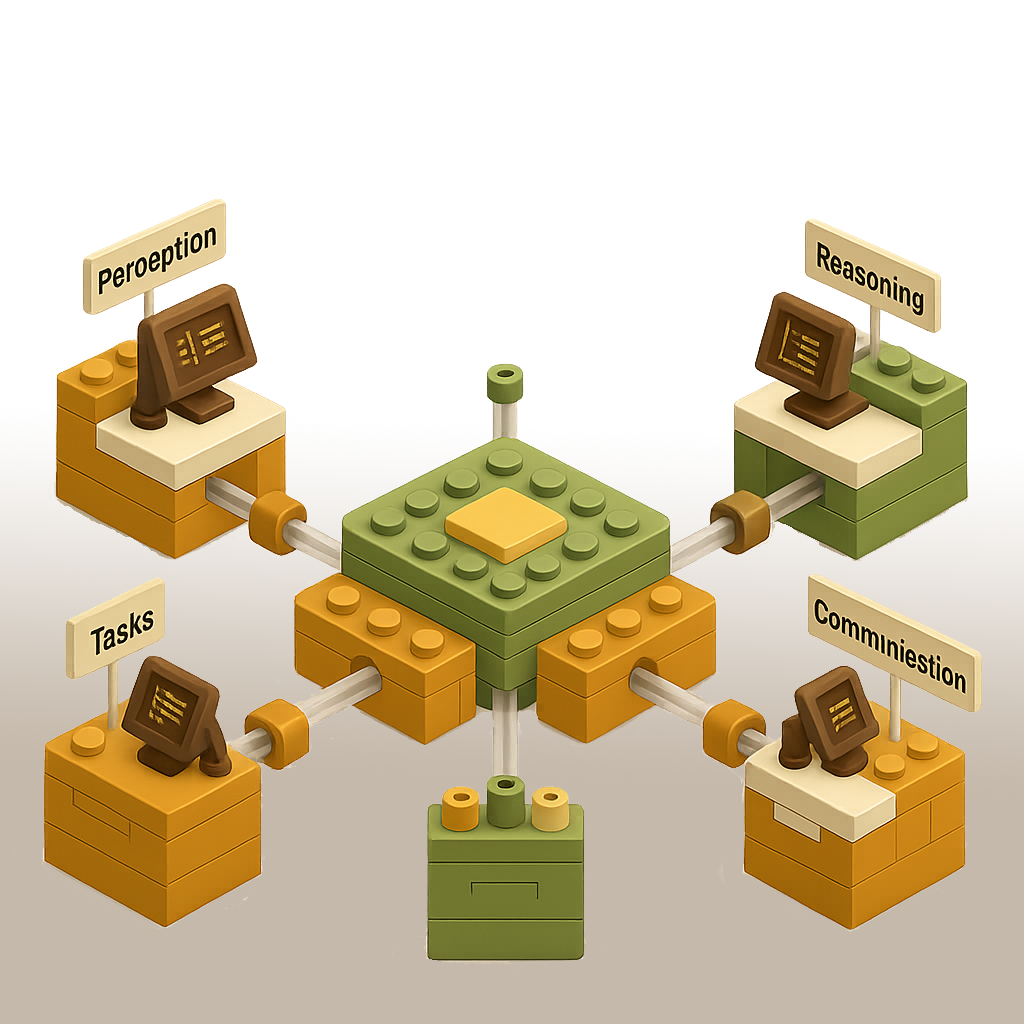
A hierarchical approach to AI agent architecture that separates orchestration from execution through distinct agent roles for efficient handling of complex tasks.
Creates a clear division of responsibilities where manager agents focus on coordination, delegation, and oversight, while worker agents specialize in executing specific subtasks.
Pattern Overview
The Manager-Worker Pattern implements a hierarchical approach to AI agent architecture that separates orchestration from execution through distinct agent roles. This pattern enables efficient handling of complex tasks by creating a clear division of responsibilities: manager agents focus on coordination, delegation, and oversight, while worker agents specialize in executing specific subtasks.
The core principle lies in decomposing complex problems into manageable units of work that can be efficiently distributed across specialized components. This approach mirrors successful organizational patterns in human teams, where managers break down objectives and delegate to subject matter experts.
Key Components
- Manager Agent: Handles task decomposition, work allocation, and result synthesis
- Worker Agents: Specialized components that execute specific subtasks
- Task Queue: Facilitates work distribution and prioritization
- Result Aggregation: Combines worker outputs into coherent solutions
- Monitoring Layer: Tracks progress and handles exceptions
Clear Separation of Orchestration and Execution
The Manager-Worker Pattern's distinctive strength comes from its clean separation between strategic coordination and specialized execution capabilities. This division creates AI systems that reflect successful organizational principles found in human teams.
- Specialization Efficiency: Worker agents focus exclusively on their domain expertise
- Centralized Coordination: Manager agents maintain global context and strategic direction
- Resource Optimization: Workload distribution based on availability and capability
- Scalable Architecture: Easy horizontal scaling by adding worker instances
Technical Architecture
System Components
1. Manager Agent
- • Implements task decomposition algorithms
- • Maintains global context and objectives
- • Handles worker selection and task allocation
- • Monitors execution progress and handles exceptions
- • Synthesizes worker results into coherent outputs
2. Task Planning System
- • Breaks complex objectives into discrete work units
- • Establishes dependencies and execution sequences
- • Defines success criteria for individual subtasks
- • Optimizes workload distribution across available resources
3. Worker Registry
- • Maintains catalog of available worker capabilities
- • Tracks worker status, capacity, and performance metrics
- • Handles worker discovery and registration
- • Implements load balancing and failover strategies
Implementation Stack
Infrastructure
Distributed computing environment with dynamic scaling and reliable messaging system with guaranteed delivery
State Management
Persistent storage for task status and partial results with comprehensive observability
Integration Patterns
API Gateway, Event-Driven Architecture, Service Mesh, and Workflow Integration compatibility
Google Cloud Components
- • Cloud Functions for lightweight worker implementations
- • Vertex AI for sophisticated reasoning components
- • Pub/Sub for reliable task distribution
- • Dataflow for complex result aggregation
- • Cloud Scheduler for recurring task management
Industry Applications
BFSI
- • Credit Analysis Workflows
- • Fraud Investigation
- • Portfolio Management
- • Regulatory Reporting
Manufacturing
- • Production Planning
- • Quality Control
- • Supply Chain Optimization
- • Equipment Maintenance
Healthcare
- • Patient Care Coordination
- • Clinical Trial Management
- • Medical Imaging Analysis
- • Treatment Planning
Retail/eCommerce
- • Omnichannel Experience
- • Inventory Optimization
- • Personalized Marketing
- • Order Fulfillment
Advantages & Limitations
Key Benefits
- Scalability: Independent scaling of manager and worker components
- Specialization: Workers focus exclusively on domain-specific tasks
- Reliability: Fault isolation prevents system-wide failures
- Resource Efficiency: Dynamic allocation based on workload demands
- Flexibility: Easy addition of new worker capabilities without system redesign
Challenges & Mitigations
Manager Bottlenecks
Hierarchical manager layers with domain specialization
Communication Overhead
Efficient protocols and appropriate batching strategies
Task Granularity Balance
Optimization based on execution metrics and profiling
Failure Propagation
Robust exception handling and graceful degradation
Coordination Complexity
Structured workflows with clear checkpoints and dependencies
Implementation Roadmap
Phase 1: Foundation
1-2 months
- • Establish core manager architecture
- • Implement task distribution framework
- • Develop monitoring and observability
Phase 2: Initial Implementation
2-3 months
- • Deploy first workflows with hierarchical decomposition
- • Implement performance measurement
- • Develop exception handling mechanisms
Phase 3: Expansion
3+ months
- • Extend to additional domains
- • Implement advanced resource optimization
- • Develop specialized worker components
Phase 4: Enterprise Scale
Ongoing
- • Establish comprehensive governance
- • Implement advanced analytics
- • Develop reusable workflow patterns