

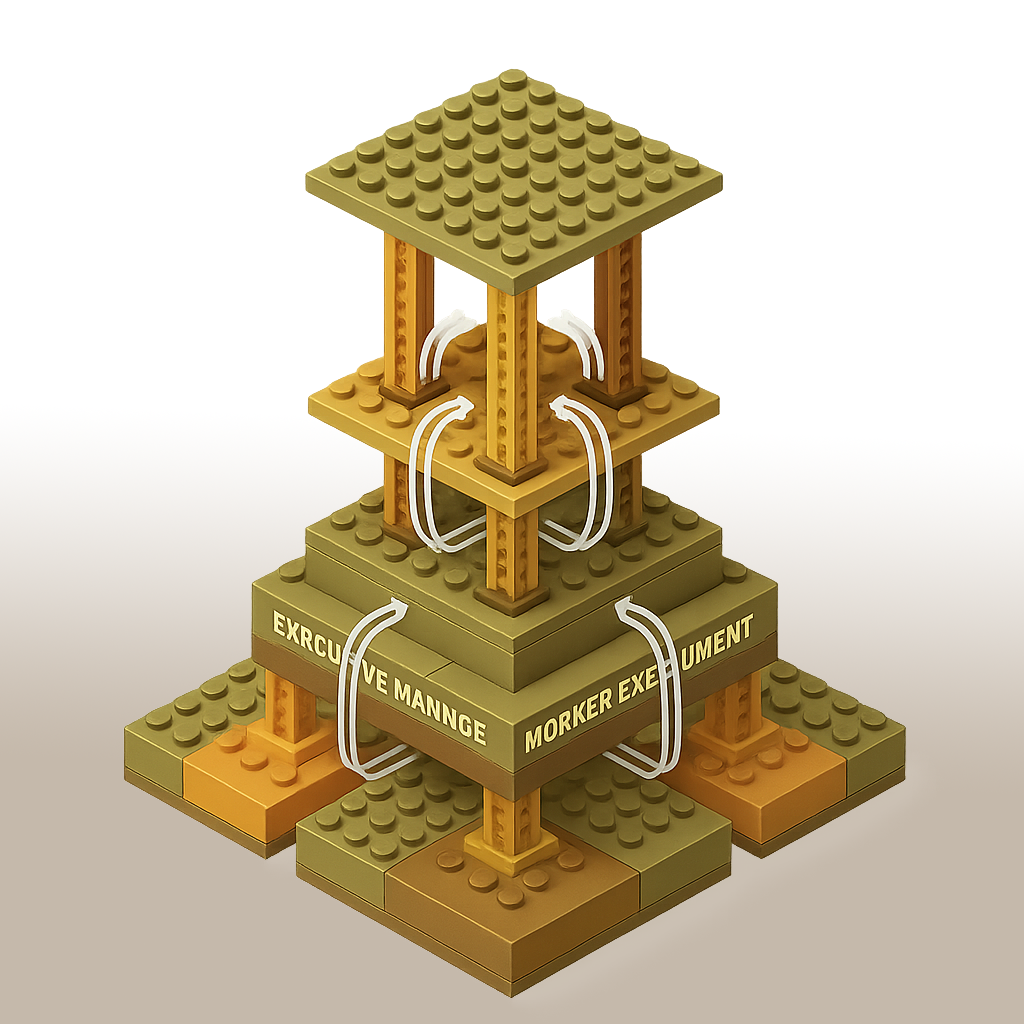
Hierarchical Multi-Agent Architecture
Multi-Level Intelligence for Complex Enterprise Problems
A sophisticated organizational structure for AI systems that mirrors complex human organizations, establishing multiple layers of agents with different responsibilities, capabilities, and scopes of authority.
Enable organizations to solve highly complex problems through structured decomposition and specialized expertise, combining global context with deep domain knowledge.
Pattern Overview
The Hierarchical Multi-Agent Architecture implements a sophisticated organizational structure for AI systems that mirrors complex human organizations. This pattern establishes multiple layers of agents with different responsibilities, capabilities, and scopes of authority, enabling the solution of highly complex problems through structured decomposition and specialized expertise.
The core principle lies in creating a decision pyramid where higher-level agents handle strategic direction and oversight while delegating increasingly specific tasks to specialized agents at lower levels. This creates a scalable approach to problem-solving that combines global context with deep domain expertise.
Key Components
- Executive Layer: Top-level agents responsible for strategic goals and oversight
- Management Layer: Mid-level agents handling domain-specific planning and coordination
- Specialist Layer: Domain-expert agents focused on specific execution tasks
- Cross-Cutting Services: Shared capabilities available across the hierarchy
- Communication Channels: Structured information flow between hierarchy levels
Multi-Tier Delegation with Specialized Domain Expertise
The Hierarchical Multi-Agent Architecture's distinctive power comes from its layered organization of increasingly specialized AI components, creating a decision pyramid that mirrors successful enterprise structures.
- Strategic Coherence: Executive agents maintain global objectives across all operations
- Domain Specialization: Lower-tier agents focus on increasingly specific knowledge domains
- Appropriate Abstraction: Each level operates at the right level of detail for its decisions
- Organizational Alignment: Mirrors human enterprise structures for intuitive integration
Technical Architecture
System Components
1. Executive Layer
- • Strategic goal management and prioritization
- • Global resource allocation and constraint definition
- • Cross-domain coordination and conflict resolution
- • High-level performance monitoring and intervention
2. Management Layer
- • Domain-specific planning and coordination
- • Resource allocation within assigned domains
- • Task decomposition and delegation to specialists
- • Progress monitoring and exception handling
3. Specialist Layer
- • Focused execution of specific tasks
- • Deep domain expertise in narrow areas
- • Direct interaction with data and systems
- • Specialized problem-solving capabilities
Implementation Stack
Infrastructure
Distributed computing environment with role-appropriate resources
Communication
Reliable messaging with appropriate priority mechanisms
State Management
Hierarchical context preservation across levels
Google Cloud Components
- • Vertex AI for sophisticated reasoning components
- • Cloud Functions for lightweight specialist implementations
- • Pub/Sub for hierarchical communication
- • Firestore for state management and context sharing
- • IAM for role-based access control
Industry Applications
BFSI
- • Enterprise risk management
- • Wealth management advisory
- • Regulatory compliance
- • Fraud detection systems
Manufacturing
- • Production management
- • Quality assurance
- • Supply chain optimization
- • Product development
Healthcare
- • Healthcare system management
- • Clinical decision support
- • Research management
- • Patient care coordination
Retail/eCommerce
- • Retail operations
- • Merchandising systems
- • Customer experience
- • Supply chain coordination
Advantages & Limitations
Key Benefits
- Strategic Alignment: Consistent direction across all system components
- Specialization Efficiency: Focused expertise at appropriate levels
- Complexity Management: Structured decomposition of complex problems
- Organizational Alignment: Intuitive mapping to enterprise structures
- Scalable Architecture: Efficient handling of growing problem complexity
Challenges & Mitigations
Communication Overhead
Optimize information flow with appropriate filtering
Decision Latency
Implement delegation authority for time-sensitive decisions
Coordination Complexity
Establish clear protocols for cross-domain interactions
Hierarchy Rigidity
Allow dynamic reorganization based on problem characteristics
Implementation Roadmap
Phase 1: Foundation
1-2 months
- • Establish core hierarchy design
- • Implement communication protocols
- • Develop prototype agents
Phase 2: Initial Implementation
2-3 months
- • Deploy first hierarchical workflows
- • Implement monitoring mechanisms
- • Develop performance framework
Phase 3: Expansion
3+ months
- • Extend to additional domains
- • Implement advanced coordination
- • Develop specialized agents
Phase 4: Enterprise Scale
Ongoing
- • Establish governance framework
- • Implement advanced analytics
- • Develop reusable patterns