

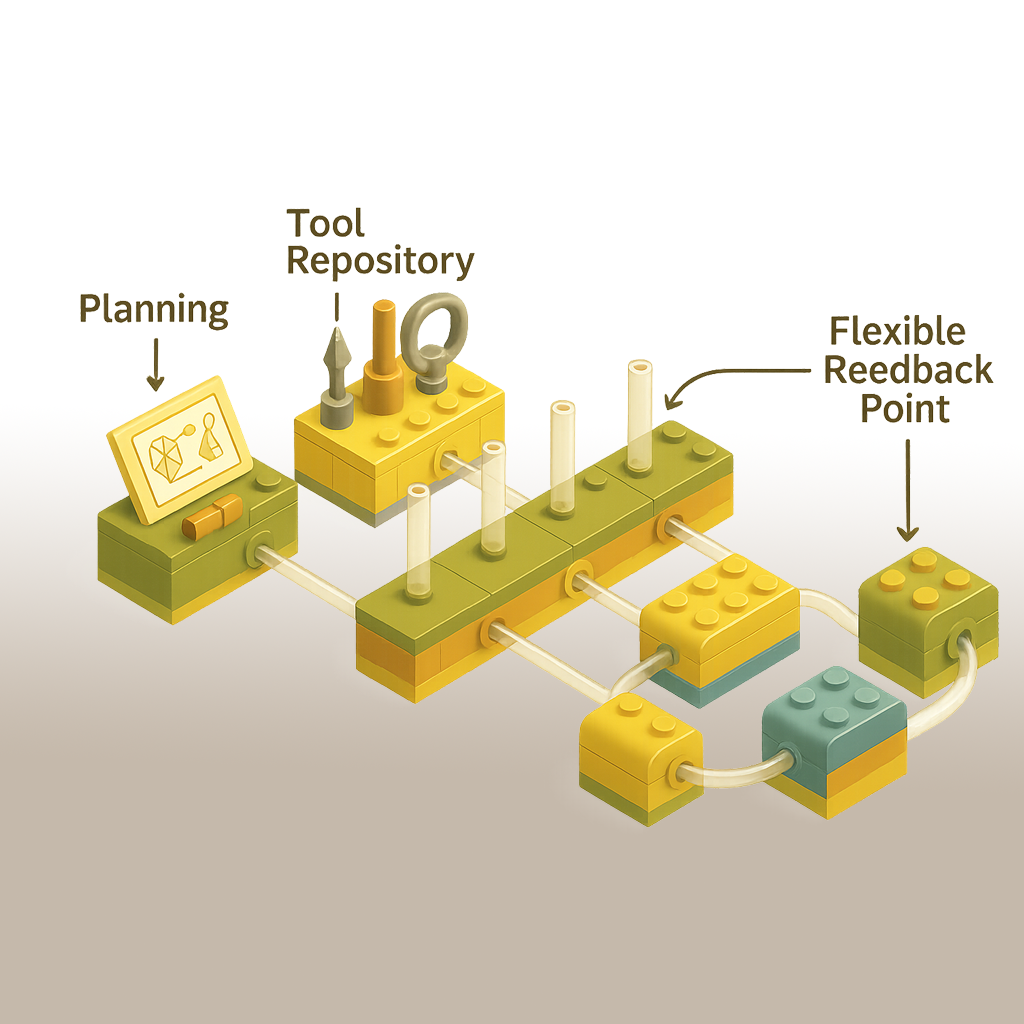
Agentic Workflows Pattern
AI-Powered Process Automation for Enterprise
A revolutionary approach to business process automation that embeds AI agents as intelligent nodes within structured workflow frameworks.
Combines the reliability and governance of traditional business process management with the adaptive intelligence of AI agents.
Pattern Overview
The Agentic Workflows Pattern represents a revolutionary approach to business process automation that embeds AI agents as intelligent nodes within structured workflow frameworks. This pattern combines the reliability and governance of traditional business process management with the adaptive intelligence of AI agents, creating systems that follow defined processes while making intelligent decisions at critical points.
The core principle lies in creating hybrid systems where workflow orchestration provides structure and governance while embedded AI agents deliver intelligence and adaptability at decision points. This approach ensures that processes follow established paths while benefiting from sophisticated reasoning at key junctures.
Key Components
- Workflow Engine: Orchestrates overall process execution and state management
- Decision Agents: AI components that handle complex reasoning at key points
- Integration Framework: Connects workflow with enterprise systems
- Monitoring System: Tracks execution and provides visibility
- Governance Layer: Implements controls and compliance mechanisms
Intelligent Decision Points
The distinctive power comes from strategic positioning of AI agents at critical decision points within structured business processes.
- Process Discipline: Maintain structured execution paths with defined stages
- Intelligent Decisioning: Apply sophisticated reasoning at critical junctures
- Exception Handling: Adapt to unusual situations while staying within governance boundaries
- Governance Compliance: Ensure regulatory and policy adherence throughout execution
Technical Architecture
System Components
Workflow Orchestration Engine
- • Process definition and execution management
- • State persistence and transaction handling
- • Routing logic and conditional branching
- • Exception management and error handling
Decision Agent Framework
- • AI agent embedding at workflow decision points
- • Context gathering and information retrieval
- • Reasoning and analysis capabilities
- • Decision output formatting for workflow consumption
Governance Framework
- • Policy enforcement and compliance checking
- • Approval workflows and human oversight
- • Regulatory control implementation
- • Decision logging and justification tracking
Implementation Stack
Infrastructure
Scalable workflow execution environment with monitoring and governance
Development Framework
Process modeling and agent integration tools with governance controls
Google Cloud Components
- • Workflows for process orchestration
- • Cloud Functions for decision agent implementation
- • Pub/Sub for event-driven communication
- • Firestore for state management
- • Vertex AI for agent reasoning capabilities
Industry Applications
BFSI
- • Loan processing workflows with intelligent underwriting
- • Claims handling with AI-powered assessment
- • Regulatory compliance verification
- • Customer onboarding automation
Manufacturing
- • Production planning with intelligent scheduling
- • Quality assurance with AI-powered defect analysis
- • Supply chain management workflows
- • Maintenance operations with intelligent prioritization
Healthcare
- • Patient admission with intelligent triage
- • Treatment authorization workflows
- • Care coordination processes
- • Billing and claims with intelligent coding
Retail/eCommerce
- • Order processing with intelligent routing
- • Returns management with AI-powered approvals
- • Inventory replenishment workflows
- • Customer issue resolution processes
Advantages & Limitations
Key Benefits
- Process Reliability: Structured execution with defined stages and transitions
- Decision Intelligence: Sophisticated reasoning at critical workflow junctures
- Governance Alignment: Built-in compliance with regulatory and policy requirements
- Operational Visibility: Comprehensive tracking and monitoring capabilities
- Integration Simplicity: Structured connections to enterprise systems
Challenges & Mitigations
Process Flexibility
Balance structure with configurable decision points
Agent Integration
Standardized interfaces between workflow and AI components
Performance Bottlenecks
Optimize critical path decision agents
Exception Handling
Comprehensive strategies for unusual scenarios
Implementation Roadmap
Phase 1: Foundation
1-2 months
- • Establish core workflow engine
- • Implement initial decision agent framework
- • Develop basic integration with key systems
Phase 2: Initial Implementation
2-3 months
- • Deploy first intelligent workflows
- • Implement governance and compliance controls
- • Develop performance measurement framework
Phase 3: Expansion
3+ months
- • Extend to additional processes
- • Enhance decision agent capabilities
- • Implement advanced integration patterns
Phase 4: Enterprise Scale
Ongoing
- • Establish workflow center of excellence
- • Implement advanced governance framework
- • Develop reusable components and accelerators